MAKES
-
 Abarth
-
 Acura
Acura
-
 Alfa Romeo
-
 Aston Martin
-
 Audi
Audi
-
 Bentley
-
 BMW
BMW
-
 Bugatti
-
 Buick
Buick
-
 BYD
BYD
-
 Cadillac
-
 Chery
Chery
-
 Chevrolet
-
 Chrysler
-
 Citroen
-
 Cupra
Cupra
-
 Dacia
Dacia
-
 Daewoo
-
 DAF
DAF
-
 Daihatsu
-
 Datsun
-
 De Lorean
-
 DFSK
DFSK
-
 Dodge
Dodge
-
 DS
DS
-
 Ferrari
-
 Fiat
Fiat
-
 Fisker
-
 Ford
Ford
-
 GAZ
GAZ
-
 Geely
Geely
-
 Genesis
-
 GMC
GMC
-
 Great Wall
-
 Hennessey
-
 Honda
Honda
-
 Hummer
-
 Hyundai
-
 Infiniti
-
 Isuzu
Isuzu
-
 Iveco
Iveco
-
 Jaguar
-
 Jeep
Jeep
-
 Kia
Kia
-
 Koenigsegg
-
 Lada
Lada
-
 Lamborghini
-
 Lancia
-
 Land Rover
-
 Lexus
Lexus
-
 Lincoln
-
 Lotus
Lotus
-
Lucid
-
 Mahindra
-
 Maserati
-
 Mazda
Mazda
-
 McLaren
-
 Mercedes
-
 MG
MG
-
 Mini
Mini
-
 Mitsubishi
-
Morgan
-
 NIO
NIO
-
 Nissan
-
 Opel
Opel
-
 Pagani
-
 Peugeot
-
 Polestar
-
 Pontiac
-
 Porsche
-
 RAM
RAM
-
 Renault
-
 Rimac
Rimac
-
 Rivian
-
 Rolls-Royce
-
 Rover
Rover
-
 Saab
Saab
-
 Scion
Scion
-
 Seat
Seat
-
 Skoda
Skoda
-
 Smart
Smart
-
Sony
-
 SsangYong
-
 Subaru
-
 Suzuki
-
 Tata
Tata
-
 Tesla
Tesla
-
 Tofas
Tofas
-
 Toyota
-
 Vauxhall
-
 Volkswagen
-
 Volvo
Volvo
-
 XPENG
XPENG
-
 Zenvo
Zenvo

Select the motor type for the year.

2016 - 2023
Jumpy III M
2016 - 2023
Jumpy III XL
2016 - 2023
Jumpy III XS
2012 - 2015
Jumpy II
(facelift 2012)
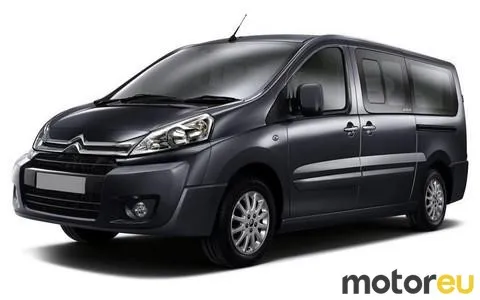
2012 - 2015
Jumpy II Multispace
(facelift 2012)
2007 - 2011
Jumpy II
2007 - 2011
Jumpy II Multispace
2004 - 2006
Jumpy I
(facelift 2004)
2004 - 2005
Jumpy I Combi
(facelift 2004)
1996 - 2003
Jumpy I
1996 - 2003
Jumpy I Dispatch
About the Citroën Jumpy
Citroën Jumpy is a Light Commercial Vehicle manufactured by Italy-based automaker Sevel Nord. The model has been produced since 1994 and has now reached its third generation, called the Mark 3. Jumpy, which is produced under different brands in the market, is also known as Peugeot Expert and Fiat Scudo. The vehicle was built on the PSA EMP2 platform and was presented to the public for the first time at the 2016 Geneva Auto Show. Carrying traces from the general design concept of the Citroen brand in its exterior design, the van is not only used for cargo but also for passenger transportation. Its large interior volume and comfortable cabin area have made the vehicle a very practical choice in the field of transportation. The trunk volume of Citroen Jumpy stands out with its huge capacity of 2625 liters and a loading capacity of 953 kg.
Citroën Jumpy Technical Specifications and Fuel Consumption
The technical specifications and fuel consumption of the Citroën Jumpy are our focus in this section. In this regard, we need to talk about details such as the engine options and fuel consumption of the Citroën Jumpy. However, while talking about these details, we limit the engine options under two categories in order not to bore you. These categories are; The Best Fuel-Economy and Most Popular engine options. Citroën Jumpy has two standard engine options such as 1.5 HDi and 2.0 HDi. First of all, we can say that the best fuel-economy engine option is 1.5 HDi. It is a four-cylindered engine with a 1499 cm3 size. It is an engine that uses diesel fuel feed system. It can produce 120 horsepower and 3500 RPM torque. According to the official factory data, 1.5 HDi has got a 5,0lt/100km (which refers to 56 MPG in the UK) mpg performance in Urban usage. However, this fuel consumption rate decreasing to 4,0lt/100km (which refers to 71 MPG in the UK) in Extra Urban usage such as Highways or Long-Distance Trip. When we combine these mpg data, we get a 4,0lt/100km (which refers to 71 MPG in the UK) average mpg performance. Now let's focus on the 2.0 HDi, the most popular engine. It has got a four cylindered engine structure with a 1997 cm3 size. It is a Diesel Type Engine which produces 150 Horsepower and 4000 RPM Torque. 2.0 HDi has got a 6,0lt/100km (which refers to 47 MPG in the UK) fuel consumption in Urban usage. On the other hand, this MPG rate decreasing to 5,0lt/100km (which refers to 56 MPG in the UK) in Extra Urban usage. When we gather these two fuel consumption data, we get a 5,0lt/100km (which refers to 56 MPG in the UK) average fuel consumption data.