MAKES
-
 Abarth
-
 Acura
Acura
-
 Alfa Romeo
-
 Aston Martin
-
 Audi
Audi
-
 Bentley
-
 BMW
BMW
-
 Bugatti
-
 Buick
Buick
-
 BYD
BYD
-
 Cadillac
-
 Chery
Chery
-
 Chevrolet
-
 Chrysler
-
 Citroen
-
 Cupra
Cupra
-
 Dacia
Dacia
-
 Daewoo
-
 DAF
DAF
-
 Daihatsu
-
 Datsun
-
 De Lorean
-
 DFSK
DFSK
-
 Dodge
Dodge
-
 DS
DS
-
 Ferrari
-
 Fiat
Fiat
-
 Fisker
-
 Ford
Ford
-
 GAZ
GAZ
-
 Geely
Geely
-
 Genesis
-
 GMC
GMC
-
 Great Wall
-
 Hennessey
-
 Honda
Honda
-
 Hummer
-
 Hyundai
-
 Infiniti
-
 Isuzu
Isuzu
-
 Iveco
Iveco
-
 Jaguar
-
 Jeep
Jeep
-
 Kia
Kia
-
 Koenigsegg
-
 Lada
Lada
-
 Lamborghini
-
 Lancia
-
 Land Rover
-
 Lexus
Lexus
-
 Lincoln
-
 Lotus
Lotus
-
Lucid
-
 Mahindra
-
 Maserati
-
 Mazda
Mazda
-
 McLaren
-
 Mercedes
-
 MG
MG
-
 Mini
Mini
-
 Mitsubishi
-
Morgan
-
 NIO
NIO
-
 Nissan
-
 Opel
Opel
-
 Pagani
-
 Peugeot
-
 Polestar
-
 Pontiac
-
 Porsche
-
 RAM
RAM
-
 Renault
-
 Rimac
Rimac
-
 Rivian
-
 Rolls-Royce
-
 Rover
Rover
-
 Saab
Saab
-
 Scion
Scion
-
 Seat
Seat
-
 Skoda
Skoda
-
 Smart
Smart
-
Sony
-
 SsangYong
-
 Subaru
-
 Suzuki
-
 Tata
Tata
-
 Tesla
Tesla
-
 Tofas
Tofas
-
 Toyota
-
 Vauxhall
-
 Volkswagen
-
 Volvo
Volvo
-
 XPENG
XPENG
-
 Zenvo
Zenvo

Select the motor type for the year.

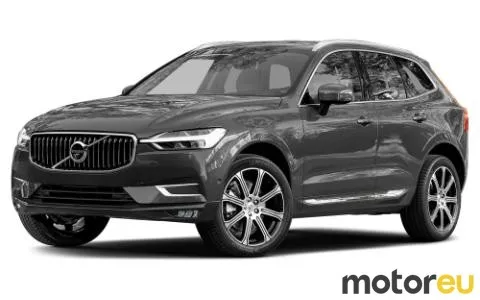
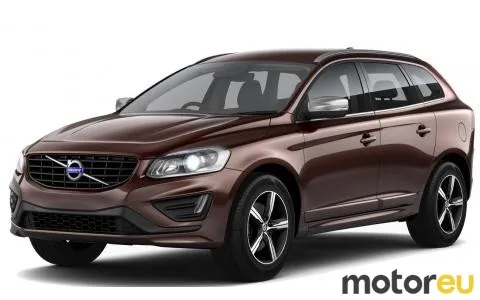
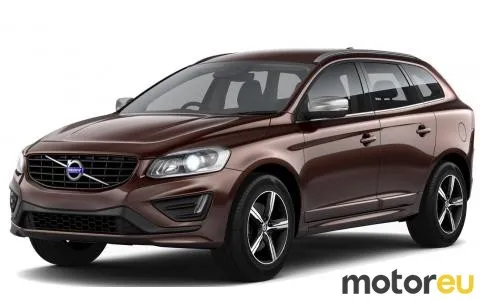
The Volvo XC60 is a Compact Luxury Crossover SUV that was first produced by Swedish automaker Volvo Cars in 2008 and is still in production today. Although the concept version of the car was first introduced in 2007, it was immediately put into mass production a year later. At the time of its introduction, it received very positive feedback from the public and became one of the most important models of the Volvo brand in the SUV class. As a well-established model, the XC60 has a two-generation classification. Although the car has changed over the years with minor facelifts, it has not lost anything from its elegance or aesthetics. When we look at the interior design of the XC60, we see a rather neat and unflattering cabin design. In particular, a driver-oriented layout has been created and made very useful, based on technology, in order to make the way the driver uses the vehicle practical.
Volvo XC60 Technical Specifications and Fuel Consumption
The technical specifications and fuel consumption of the Volvo XC60 are our focus in this section. In this regard, we need to talk about details such as the engine options and fuel consumption of the Volvo XC60. However, while talking about these details, we limit the engine options under two categories in order not to bore you. These categories are; The Best Fuel-Economy and Most Popular engine options. Volvo XC60 has eight standard engine options such as 2.0 D3, 2.0 D4, 2.0 D5, 2.0 Hybrid, 2.0 T4, 2.0 T5, 2.0 T6 and 2.0 T8. We can say that in terms of both fuel consumption efficiency and popularity best engine option is 2.0 T8. It is a four-cylindered engine with a 1969 cm3 size. It is a Hybrid type engine. So, we can say that it also has got an electric engine. It can produce 401 horsepower and 5700 RPM torque. While the engine accelerates from 0 to 100 km in just 5.3 seconds, it performs very well compared to an SUV. According to the official factory data, when we combine the mpg datas of the 2.0 T8, we get a 2,1lt/100km (which refers to 134 MPG in the UK) average fuel consumption data.