Best Acceleration Best Acceleration

Model 0-100 acceleration
Audi A4 Avant 2.0 TDI (143 Hp)
2012-2013 Diesel Automatical 9,50 sec
 Emissions
9,50 sec
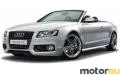
Audi A5 Cabriolet 1.8 TFSI (160 Hp)
2009-2011 Petrol (Gasoline) Automatical 9,50 sec
 Emissions
9,50 sec
Audi A4 Avant 2.0 TDI (143 Hp)
2012-2013 Diesel Manual 9,50 sec
 Emissions
9,50 sec
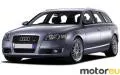
Audi A6 Avant 2.4i V6 24V (177 Hp)
2004-2008 Petrol (Gasoline) Automatical 9,50 sec
 Emissions
9,50 sec
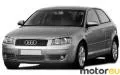
Audi A3 2.0 FSI (150 Hp)
2003-2005 Petrol (Gasoline) Automatical 9,50 sec
 Emissions
9,50 sec
Audi A6 Avant 2.4 V6 30V (165 Hp)
1998-2000 Petrol (Gasoline) Automatical 9,50 sec
 Emissions
9,50 sec
Audi A3 2.0 TDI 8V (140 Hp)
2005-2008 Diesel Manual 9,50 sec
 Emissions
9,50 sec
Audi A6 Avant 2.5 TDI V6 (163 Hp)
2002-2003 Diesel Automatical 9,50 sec
 Emissions
9,50 sec
Opel Omega B 2.5i V6 (170 Hp)
1999-2000 Petrol (Gasoline) Manual 9,50 sec
 Emissions
9,50 sec
Seat Leon III SC 1.0 TSI (115 Hp)
2016-2018 Petrol (Gasoline) Automatical 9,50 sec
 Emissions
9,50 sec
Audi A6 Avant 2.5 TDI V6 (163 Hp)
2002-2003 Diesel Manual 9,50 sec
 Emissions
9,50 sec
Seat Leon III SC 1.0 TSI (115 Hp)
2016-2018 Petrol (Gasoline) Manual 9,50 sec
 Emissions
9,50 sec
Seat Leon III SC 1.6 TDI (115 Hp)
2016-2018 Diesel Manual 9,50 sec
 Emissions
9,50 sec
Seat Leon III SC 1.6 TDI (115 Hp)
2016-2018 Diesel Automatical 9,50 sec
 Emissions
9,50 sec
Audi A3 2.0 FSI (150 Hp)
2005-2006 Petrol (Gasoline) Automatical 9,50 sec
 Emissions
9,50 sec
Volkswagen Golf VII Variant 1.4 TSI (125 Hp)
2017-2018 Petrol (Gasoline) Automatical 9,50 sec
 Emissions
9,50 sec
Volkswagen Golf VII Variant 1.4 TSI (125 Hp)
2017-2018 Petrol (Gasoline) Manual 9,50 sec
 Emissions
9,50 sec
Mercedes-Benz GLA GLA 200d (136 Hp)
2017-2019 Diesel Manual 9,50 sec
 Emissions
9,50 sec
Mercedes-Benz GL GL 350 CDI (224 Hp)
2009-2010 Diesel Automatical 9,50 sec
 Emissions
9,50 sec
Vauxhall Insignia I Hatchback 2.0 CDTi ecoTEC (163 Hp)
2013-2015 Diesel Manual 9,50 sec
 Emissions
9,50 sec
Vauxhall Insignia I Sports Tourer 2.0 CDTi ecoTEC (160 Hp)
2008-2013 Diesel Automatical 9,50 sec
 Emissions
9,50 sec
Vauxhall Insignia I Saloon 2.0 CDTi ecoTEC (163 Hp)
2013-2015 Diesel Manual 9,50 sec
 Emissions
9,50 sec
Dodge Stratus II Coupe 2.4i 16V (149 Hp)
2001-2006 Petrol (Gasoline) Automatical 9,50 sec
 Emissions
9,50 sec
Lancia Thesis 2.4 20V (170 Hp)
2002-2007 Petrol (Gasoline) Automatical 9,50 sec
 Emissions
9,50 sec

Cars with the best acceleration or in other words “the fastest accelerating cars” are listed above. List is sorted by the time which sports car can make from 0 – 60 miles or 0 – 100 km in seconds. Do not forget, these cars are production cars, they are all stock and not modified street legal cars. In the list you can find 0-60 times of all cars. According to our list, the fastest accelerating car in the world record is held by Bugatti Chiron. It is followed by Porsche 918 Spyder, Nissan GT-R and Tesla Model S. Accelerating times are quite close even there are different technologies such as internal combustion engines, hybrid technologies and electric motors.

Acceleration of a car is directly related to aerodynamics of the vehicle. Engine power and the weight of the vehicle are other parameters that really matter. It is another topic to think about why electric cars have a better acceleration than normal cars. It is simply because of electric motor technology, since there is no transmitted power from gearbox the acceleration is non-stop. Thus, they can easily compete with powerful petrol engines with best acceleration time. 
«